

Great Migration Safaris in Kenya
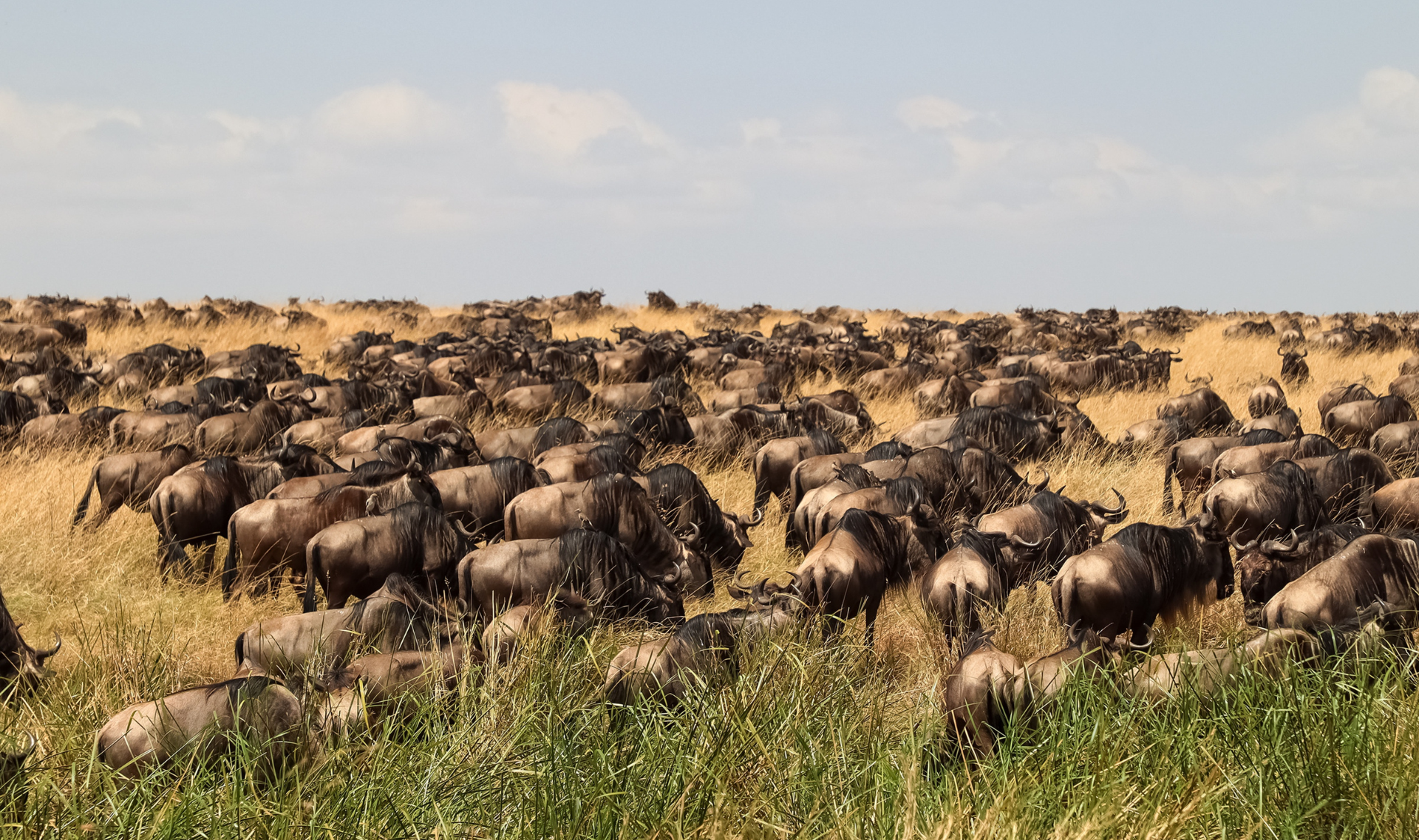
The great migration safaris in Kenya are one of the most extraordinary wildlife safari experiences in the world, worth witnessing during Kenya safaris.
The annual wildebeest migration in Kenya occurs mainly in the Masai Mara National Reserve Kenya, in major reserve hotspots like the Mara River, the Talek River, the Mara Triangle, and the Masai Mara private conservancies.
Annually, over two million wildebeests, gazelles, and zebras cross the endless plains of the Masai Mara National Reserve in Kenya to the Serengeti National Park in Tanzania in the ~800-40,000 square mile Serengeti-Mara ecosystem.
The great migration is a front-row seat to the world’s greatest spectacle, with dramatic river crossings filled with Nile crocodiles, predator-prey interactions, and calving seasons where new life begins.
Tourists who wish to witness and enjoy great migration tours in Kenya need to visit Kenya during the dry season from July to October, with maximized wildlife sightings and also stay in nearby lodges and camps.
Key Takeaways About the Remarkable Migration Safaris in Kenya
- Great migration tours in Kenya take place in the Maasai Mara National Reserve in major hotspots like the Talek and Mara rivers and in private Masai Mara conservancies.
- Tourists on annual migration safaris in Kenya have perfect chances of seeing over 2 million wildebeests and hundreds of thousands of zebras and gazelles crossing the deadly Mara River in the Serengeti-Mara ecosystem, as well as unique predator-prey interactions led by lions, hyenas, and cheetahs.
- In Kenya’s Maasai Mara Game Reserve, the spectacular wildebeest migration can be seen during the peak dry season from late July to October for excellent game sightings and Mara river crossings.
- Additional information you need to consider as you start planning your Kenya migration safari, such as parks to add on (Amboseli National Park), best time for seeing dramatic moments along the Mara River, lodges, etc.
Best Cultural & Wildlife Safari Kenya Tour Packages


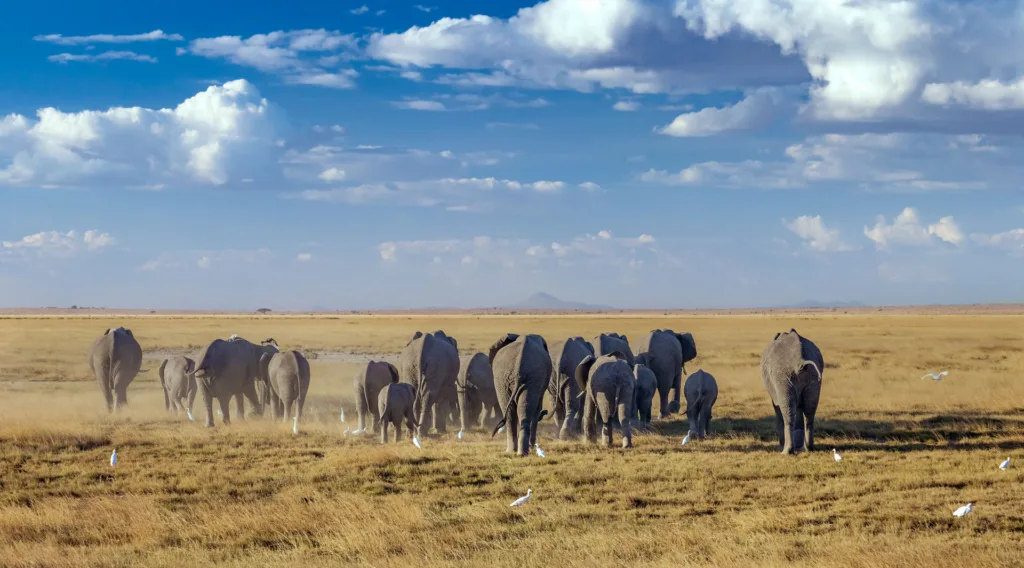

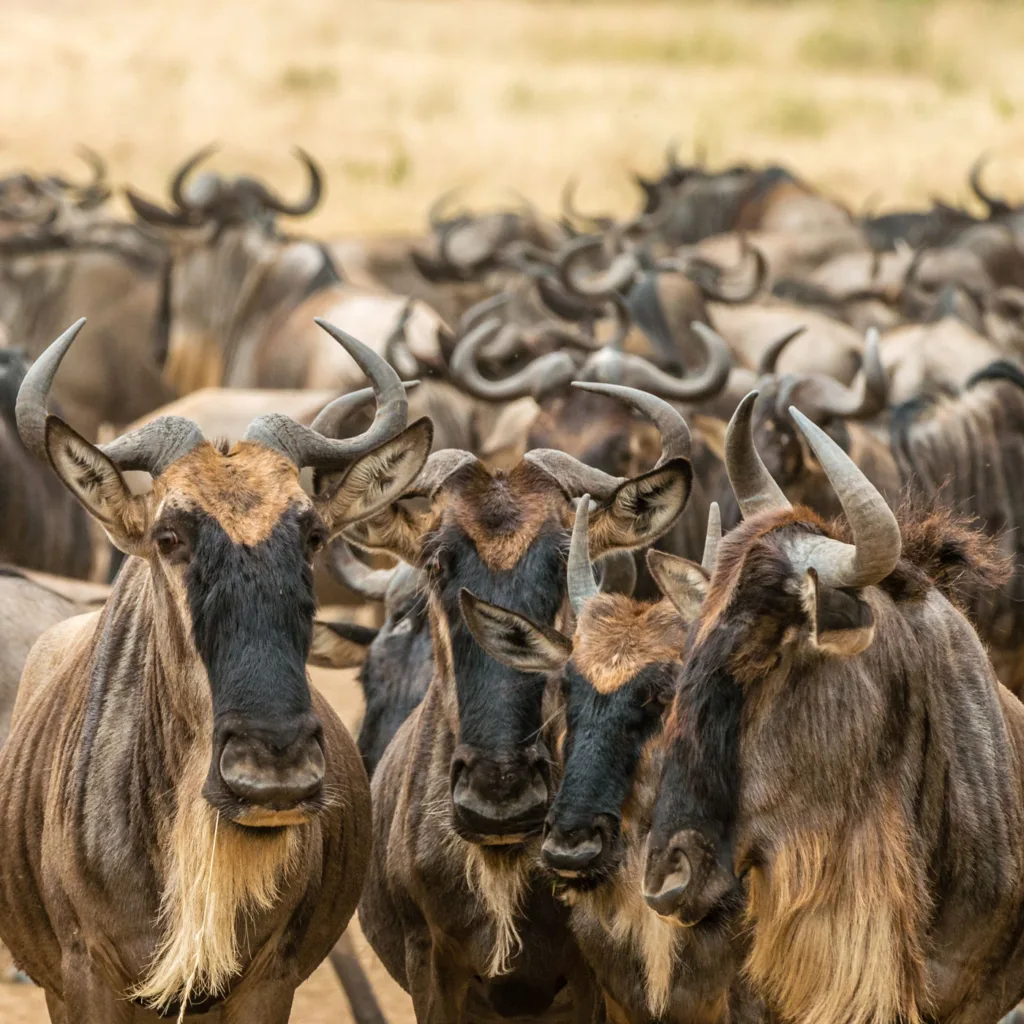




Here is a detailed guide with some of the information you need to know about the great migration tours in Kenya!
What is the Great Wildebeest Migration?

The annual wildebeest migration is a continuous year-round movement of over 2 million wildebeests, hundreds of thousands of zebras, and gazelles, generally believed to be driven by rainfall patterns and the search for fresh pastures (new grass) from Kenya’s Masai Mara Reserve to Tanzania’s Serengeti National Park.
This is the largest wildlife spectacle in the world, with no scientific proof that crosses the Serengeti-Masai Mara ecosystem in an annual clockwise direction of approximately 1,000- 2,000 km along the age-old route involving dramatic river crossings at the Mara River to the predator-surrounded plains.
Maasai Mara National Reserve
The Maasai Mara National Reserve is a major great migration safari destination in Kenya, where tourists can witness this great wildlife spectacle.
The Maasai Mara Game Reserve is one of Kenya’s best and most visited game reserves or parks that spans approximately 1,510 square kilometres in southwestern Kenya’s Narok county, forming part of the northern extension of the larger Serengeti ecosystem, sharing an unfenced border.
Kenya’s Masai Mara Game Reserve boasts vast rolling savannah plains dotted with acacia trees and crossed by the Talek and Mara Rivers.
It is home to diverse wildlife species, including the Big Five and other small and large mammals in exceptional numbers.
Masai Mara Game Reserve offers some of Africa’s finest wildlife viewing opportunities all year round, especially for first-time visitors staying in nearby lodges in the reserve, including the annual wildebeest migration spectacle.
Why Choose the Masai Mara National Reserve for Great Migration In Kenya Safaris?
Tourists often choose to engage in the great migration tours in the Maasai Mara National Reserve of Kenya because of various reasons, i.e.,
- High Predator-Prey Interactions: The Maasai Mara National Reserve is smaller than the Serengeti National Park in Tanzania, so herds are more concentrated and easier to see, including the dramatic predator-prey interactions.
- Dramatic River Crossings: The key great migration hotspots are in the Masai Mara, including the dramatic Mara River crossings; the Mara triangle in the west with fewer crowds and vehicles, plus good rhino and elephant sightings; and areas near the Talek River.
- Easy Game Viewing: Maasai Mara National Reserve has several private conservancies, such as Naboisho, Olare Motorogi, Mara North, etc., which provide more private and exclusive safari experiences characterized by fewer safari vehicles, fewer crowds, top-notch lodges, night drives, guided walking safaris, and off-road access, often not permitted in the main reserve.
Key Great Kenya Migration Safari Timing & Experiences in Kenya
Timing is a crucial part of a perfect great migration tour in Kenya for travelers who wish to see the annual wildlife spectacle.
In Kenya’s Maasai Mara National Reserve, travelers can see the great wildebeest migration in specific months of the year (~3-5 months only), as detailed below.
July And August- Arrival and First Crossings
In July, the animals begin to arrive in the Grumeti reserve, the western corridor, and Kotagende, preparing for the first crossings along the Mara River from the Serengeti National Park and Ngorongoro Crater in Tanzania to the Maasai Mara National Reserve in search of food and water, though small numbers stay back.
In August, herds begin to arrive in the Maasai Mara National Reserve after crossing the deadly Mara River, infested by hungry crocodiles, and come face to face with the hungry predators in the national park.
This is a peak dry season in the Masai Mara with good weather, perfect for prime wildlife sightings.
September -Mara River Crossings
September offers peak drama as most of the concentrated herds of the wildebeests settle in the Masai Mara Game Reserve, though some evidently try to cross the Mara River to reach the park.
There are excellent predator-prey interactions in September as tourists in lodges and camps can clearly see lions, hyenas, and other predators hunting down prey.
Tourists on exclusive-use safari vehicle game drives and photography safari activities often have the best sightings and shots.
October and Early November – The Animals Leave Masai Mara for the Serengeti -Calving Season
In October, herds start moving south again to the Loliondo and Lobo valley regions of the northern Serengeti from Kenya’s Masai Mara.
In early November, the vast herds of animals continue to return from the northern part of the reserve to the southern plains through Loliondo and Lobo Valley along the northern and eastern side of the Serengeti National Park (Tanzania) before the great wildebeest migration and calving resume again in the northern and southern Serengeti.
Activities done in the Maasai Mara National Reserve and its conservancies to witness this great wildlife spectacle include game drives, camping, day and night game drives, game viewing, guided walking safaris, and Maasai cultural experiences.
World-Class African Safari Lodges and Camps to Stay at During Great Migration Tours in Kenya
Tourists visiting Kenya on Great Migration tours are strongly encouraged to stay in eco-friendly lodges in the Maasai Mara National Reserve, near the Mara River or the private conservancies for two- or three-night stays that range from budget to midrange to luxury lodges or camps for front-row seats to the wildlife spectacle.
Some of these lodging/accommodation options include the Mara Expedition Camp, Angama Mara, Mara Plains Camp, Mara Toto Tree Camp, Rekero Camp, Mara Serena Safari Lodge, and &beyond Kichwa Tembo Tented Camp, and Entim Mara Lodge, among other lodges.
Best Time to Visit Kenya for the Great Migration Tour in East Africa
The best time to visit Kenya for a remarkable great migration tour in the Maasai Mara National Reserve is during the dry months from July to October (peak season) and August to September, when the annual wildebeest migration herds cross the vast plains of the Masai Mara National Park and along steep riverbanks of the Mara River in a beautiful chaos mixed with predator-prey interactions in the surrounding landscapes.
Guided game drives in 4×4 safari vehicles (morning or late afternoon game drives) offer some of the best sightings of these massive herds of wildebeests and zebras as they brave the crocodile-infested Mara River crossings to Northern Serengeti National Park (Tanzania) and Ngorongoro Crater (Tanzania).
Kenya’s Annual Migration Safari Costs
The costs incurred by most travelers on great migration tours in Kenya often depend on the accommodation/lodging, transport, season, group size (big or smaller groups), etc., with daily expenses being around USD 300-800+ per person.
The average costs incurred, depending on travel style, range from USD 1,800-2,500 (budget), USD 3,000-4,500 (mid-range), and USD 5,000-8,000+ (luxury), covering accommodation/lodges, park entrance fees, transportation, etc.
Guidelines and Tips for Planning a Great Migration Safari in Kenya
Tourists planning to go for great migration safaris in Kenya are strongly encouraged to understand and consider the following tips below.
- What to Expect: Prepare for early morning and late afternoon safari drives, hot air balloon rides, and Maasai cultural experiences, as these provide the perfect opportunities to see the great migration firsthand.
- Kenya Safari Packing List: Bring essential items and attire like Malaria prophylaxis, neutral-colored clothing, binoculars, a camera with a zoom lens, warm layers, etc.
- Booking: Book at least 6-12+ months ahead to avoid missing out because tented camps and lodges fill up quickly during the peak migration season through reputable tour operators.
- Sustainability: Stay in eco-friendly lodges and tented camps in the Maasai Mara National Reserve and its private conservancies for the best views of the spectacular wildebeest migration.
Alternative Activities to Add on Annual Migration Safaris in Kenya (E.g., Game Drives)
Travelers on annual wildebeest migration tours in Kenya have plenty of alternative activities to engage in to see the great migration, including
- Hot air balloon rides
- Game Drives (Early morning game drives, late afternoon game drives, and Night drives)
- Guided bush walks
- Camping in mobile camps with expert trackers
- Cultural experiences and village visits
Other African Parks to Combine with the Masai Mara for the Ultimate Great Migration Safari (e.g., Amboseli National Park)
- Amboseli National Park
- Lake Nakuru National Park
- Samburu National Reserve, Kenya
- Hell’s Gate National Park,
- Ngorongoro Crater (Tanzania),
- The Serengeti National Park (Tanzania), etc.
How To Get to Kenya for A Great Migration Tour?
Tourists embarking on a great wildebeest tour in Kenya need to get to the country first before enjoying their safari.
They can get to Kenya by flying to Nairobi International Airport and, on arrival, use either domestic flights to fly to Masai Mara airstrips like Kichwa Tembo, Serena, etc., or use 4×4 road transfers to Masai Mara National Park gates or lodges. READ MORE!
Kenya Travel Agencies That Tailor the Best Great Migration Tours

- Prime Safaris & Tours Ltd
- Wild Gorilla Safaris
- Kenya safari Tours
- Africa Safari Tours
- Tanzania Safaris and Tours
The Great Migration in Kenya Map
Commonly Asked Questions About the Great Kenya Migration Safaris in Kenya
-
What Time of Year Is the Great Migration in Kenya?
The remarkable wildebeest migration in Kenya, dictated primarily by the need for fresh grazing by the massive herds of wildebeests, takes place from July to October in the Masai Mara game reserve when large herds of wildebeests migrate north from the Serengeti National Park (Tanzania) in search of fresh grazing.
-
Where Is the Best Place to See the Great Migration in Kenya?
The best place to see the annual wildebeest migration in Kenya is the Maasai Mara National Reserve, especially along the Mara River when a million animals cross this river to Northern Serengeti (Tanzania), in the Mara Triangle, and in the private conservancies like Mara Naboisho, Olare Motorogi, etc.
-
Which Animal Is Mostly Found in Kenya?
The fascinating animals found in Kenya include the Big Five (lions, elephants, leopards, buffaloes, and rhinos), large herds of wildebeests, zebras, gazelles, giraffes, hyenas, wild dogs, etc.
-
What Is The 12 Hour Rule for Masai Mara?
The 12-hour rule in the Maasai Mara National Reserve, implemented by Narok County and Kenya Wildlife Service, stipulates that park entrance fees are valid for a 12-hour period between 6:00 AM and 6:00 PM.
-
Is It Safe to Visit Masai Mara?
Yes, it’s generally safe to visit the Maasai Mara National Reserve Kenya, as it is guarded and protected by KWS and tourism police.
-
What Time of Year Is Best for A Safari in Kenya?
The best time of the year for a safari in Kenya is during the dry seasons from late June to October, when the weather conditions support prime wildlife viewing as animals tend to concentrate around waterholes, and the annual wildebeest migration is in motion.
-
What Is Better, the Masai Mara or the Serengeti?
Both wildlife safari parks in East Africa are better than the other in their own ways, therefore the choice of which is better largely depends on your preferences i.e.
| Advantage | Maasai Mara (Kenya) | Tanzania’s Serengeti National Park and Ngorongoro Conservation Area |
| Best For | Short trips (3-4 days), first-time safari goers, and big cat sightings | Long trips in a more remote area in Tanzania’s Serengeti National Park and Ngorongoro Crater |
| Wildlife Density | Higher wildlife density in a compact area makes animal sightings easy | Huge wildlife density in the erengeti park and surrounding reserves in Tanzania |
| Migration | Dramatic Mara River crossings in July to October | Huge herds of wildebeests from November to June |
| Cost and accessibility | Easy access from Nairobi with budget-friendly options | More expensive, requiring more travel time and higher budget in Tanzania |
| Crowds | Crowded in peak seasons, especially in the main reserve and in private conservancies | Fewer crowds, considering its vastness (~14,763 sq km) |
Whether you’re a first-time safari goer or a wildlife enthusiast seeking to see the annual wildebeest migration, the great Kenya migration safaris are perfect for you. Contact our team of safari experts today for tailored Great Migration tour packages!