Masai Mara Kenya Safari Guide: Best Time, Cost & Big Five Experience

Kenya Safari Tours Explained: Packages, Itineraries & Prices
February 4, 2026
Ultimate African Safari in Kenya: Best Parks, Wildlife & Travel Tips
February 8, 2026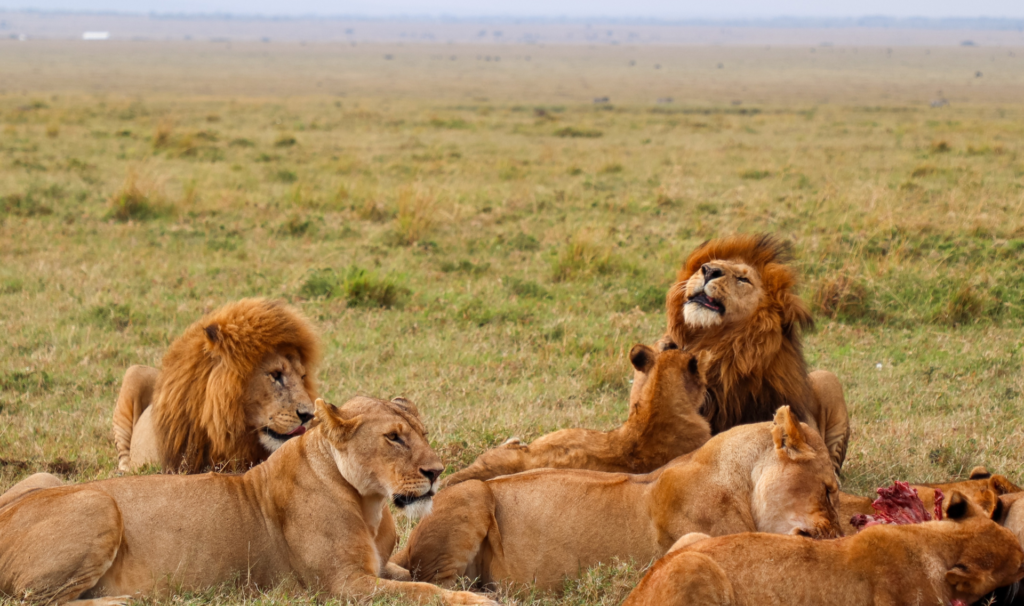
For over 15 years, I have watched the first golden light of dawn hit the rolling savannahs of the Masai Mara. I have stood silent as a pride of lions orchestrated a hunt near the Talek River and felt the ground tremble beneath the hooves of a million wildebeest. If you are planning a Masai Mara Kenya Safari in 2026, you aren’t just booking a vacation; you are stepping into the most iconic wildlife theater on the planet.
As a veteran of these plains, I’ve seen the Mara evolve. Today, it’s not just about the “Big Five”—it’s about sustainable conservancy models, electric “silent” safaris, and high-tech conservation. This guide is your expert-vetted blueprint for navigating the Mara in 2026, from budgeting for the new park fee structures to timing your arrival for the Great Migration.
1. When to Visit: Timing Your Masai Mara Kenya Safari
Timing is everything. The “best” time depends entirely on whether you want to see the thundering herds of the migration or prefer the quiet, lush beauty of the green season.
The Great Migration (July – October)
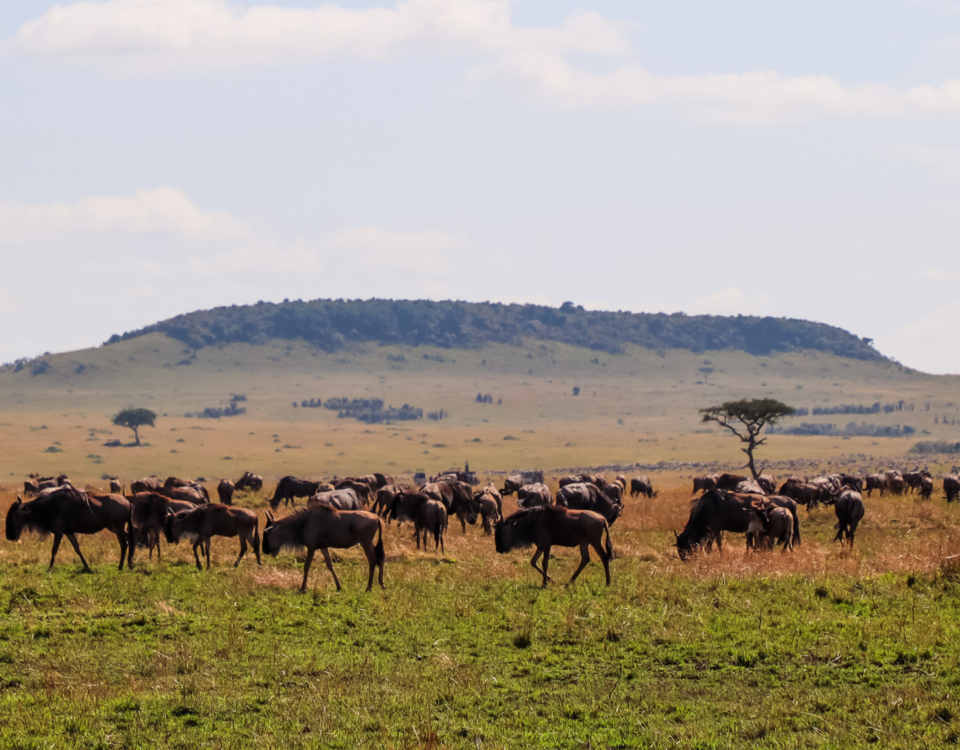
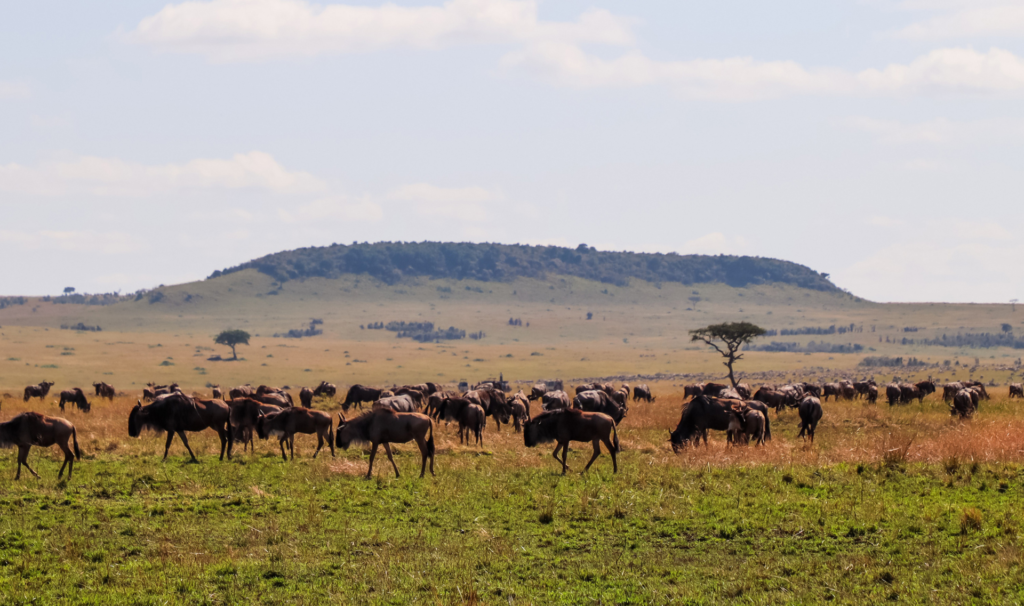
This is the Mara’s “Peak Season.” In 2026, experts predict the first herds will cross the Sand River from the Serengeti around mid-July.
- The Spectacle: The world-famous Mara River crossings, where wildebeest brave crocodile-infested waters, typically peak between August 20th and September 10th.
- The Trade-off: Expect higher prices and more vehicles. To escape the crowds, look into staying in private conservancies like Mara North or Naboisho.
The “Lion Season” & Birthing Months (January – March)
This is my personal favorite. The weather is dry, the grass is short (making wildlife easier to spot), and it is the calving season for many herbivores.
- Why it works: Thousands of foals and calves are born, which in turn triggers incredible predator activity. If you want to see lions and cheetahs in action, this is your window.
The Green Season (April – June)
The “long rains” transform the Mara into a vibrant emerald paradise.
- The Expert Secret: While some roads get muddy, the photography is unparalleled. The air is dust-free, the light is soft, and lodge prices can drop by up to 40%.
2. Understanding the Cost: 2026 Safari Budgeting
In 2026, the Masai Mara introduced a new tiered park fee system that has significantly impacted safari budgets. As of now, entry fees for non-residents are split into two seasons:
Park Entry Fees (Non-Residents)
| Season | Adult Fee (Per 12 Hours) | Child Fee (9–17 Years) |
| Low Season (Jan – June) | $100 | $50 |
| Peak Season (July – Dec) | $200 | $50 |
Note: Children under 9 years old generally enter for free. The “12-hour rule” means your ticket is valid from 6:00 AM to 6:00 PM.
Total Package Estimates
A standard 3-to-4-day Masai Mara Kenya Safari typically falls into these price brackets (per person, per day, including transport and meals):
- Budget (Shared Join-in): $250 – $350. You’ll stay in tented camps outside the main gates.
- Mid-Range (Private 4×4): $450 – $750. Staying in comfortable lodges or boutique camps.
- Luxury (Fly-in): $1,000 – $2,500+. Inclusive of domestic flights, top-tier guides, and premium conservancy access.
3. The Big Five Experience: Where to Look
The “Big Five”—Lion, Leopard, Elephant, Buffalo, and Rhino—are all resident in the Mara, but they aren’t all found in the same place.
- Lions: Ubiquitous. The Musiara Marsh and Paradise Plains are legendary for large prides.
- Leopards: These masters of stealth prefer the riverine forests. Look along the Talek and Mara Rivers where thick acacia trees provide cover.
- Rhinos: The rarest of the five. Your best chance is in the Mara Triangle, the western sector of the reserve, where rangers provide 24/7 protection for a small, growing population.
- Elephants & Buffalo: You will find these in large numbers across the central plains and near water sources.
4. Why You Should Consider a Private Conservancy
While the National Reserve is iconic, the adjacent Private Conservancies (like Olare Motorogi and Mara Naboisho) offer a vastly different experience.
- Strict Vehicle Limits: Usually no more than five vehicles at a sighting, compared to dozens in the main reserve.
- Off-Roading: Guides are permitted to go off-track to follow rare sightings (like a leopard with a kill).
- Night Drives: Night game drives are prohibited in the National Reserve but are a highlight of conservancy stays.
5. First-Timer Tips from a 15-Year Expert
- Pack Layers: The savannah is freezing at 5:30 AM and baking by noon.
- Neutral Colors Only: Avoid bright whites (shallows the animals) and dark blues/blacks (attracts Tsetse flies). Khaki, olive, and tan are your best friends.
- Ditch the Plastic: Kenya has a zero-tolerance policy for single-use plastic bags. Use reusable dry bags for your gear.
- The Power of Binoculars: Don’t rely solely on your camera zoom. A high-quality pair of 8×42 binoculars will change how you see the bush.
FAQ:
1.Is it safe to go on a Masai Mara Kenya Safari in 2026?
Yes. Kenya’s tourism infrastructure is world-class. In 2026, the transition to the Electronic Travel Authorization (eTA) has made arrival smoother and more secure. We recommend using a reputable operator who provides a dedicated driver-guide for the duration of your trip.
2.How do I get to the Masai Mara?
You have two main options:
- By Road: A 5-to-6-hour drive from Nairobi. The road is paved most of the way but becomes a “natural massage” (bumpy) once you enter the park area.
- By Air: A 45-minute flight from Wilson Airport (Nairobi) directly to bush airstrips like Keekorok, Olkiombo, or Musiara.
3.Do I need a visa for Kenya in 2026?
Kenya has replaced traditional visas with the eTA (Electronic Travel Authorization). Every traveler must apply online at least two weeks before departure. The cost is approximately $30.
4.Can I see the Great Migration in October?
Yes. While the dramatic river crossings peak in August/September, the herds often linger in the Mara until mid-October before the “short rains” trigger their return to the Serengeti.
5.What is the difference between the National Reserve and the Mara Triangle?
The Mara Triangle is the western one-third of the Masai Mara, managed by a non-profit conservancy. It is generally considered better managed, with stricter rules against overcrowding and excellent rhino sightings.
Editorial Policy & Research
Our content at Kenya Safaris Tours is curated by active field guides and travel specialists with a combined 50+ years of experience in East Africa.
- Direct Verification: We regularly audit the lodges and vehicle standards mentioned.
- Sustainability Check: We prioritize partners who are members of Ecotourism Kenya.
- Up-to-Date Pricing: All fees are cross-referenced with the Narok County Government 2026 circulars.
Plan Your Dream Safari with Us
Don’t leave your “once-in-a-lifetime” trip to chance. We specialize in bespoke Masai Mara Kenya Safaris that prioritize authentic wildlife encounters and luxury comfort.
Contact Kenya Safari Tours:
- Website: KenyaSafariTours.com
- Email: info@kenyasafaristours.com
- WhatsApp/Call: +256414532162 / +256773912891
- Location:Kajjansi Bweya, Along Kajjansi Bweya Lutembe Rd, Near West Minister Theological College.