The Great Migration Experience with Kenya Safari Tours

Kenya Safari Destinations – Top Amazing Places to Visit in Kenya
May 20, 2025
Complete Travel Guide to Safaris in Kenya Africa for First-Time Visitors
January 23, 2026
In 2026, the Maasai Mara remains the undisputed stage for the greatest wildlife show on earth. But for the modern traveler, a Kenya Safari Tours experience is no longer just about seeing the animals—it’s about timing, ethics, and finding those quiet pockets of magic amidst the thundering hooves.
As we move through 2026, the focus has shifted toward “slow safari” and meaningful conservation. This guide, built on 15 years of boots-on-the-ground expertise, is your definitive roadmap to witnessing the Great Migration with clarity and soul.
The Great Migration: Beyond the National Geographic Lens
When people think of the Great Migration, they usually envision a chaotic river crossing. While those moments are heart-stopping, the migration is actually a living, breathing cycle that never truly stops. It is a 500-mile odyssey driven by the scent of rain and the promise of fresh grass.
With Kenya Safari Tours, we don’t just “chase” the migration; we anticipate it. By understanding the rhythm of the herds, we place you in the heart of the action while others are still looking at their maps.
1. The 2026 Migration Calendar: When to Be Where
While nature doesn’t keep a diary, it does follow the clouds. Here is the anticipated flow for the 2026 season:
The Arrival (Late June – July)
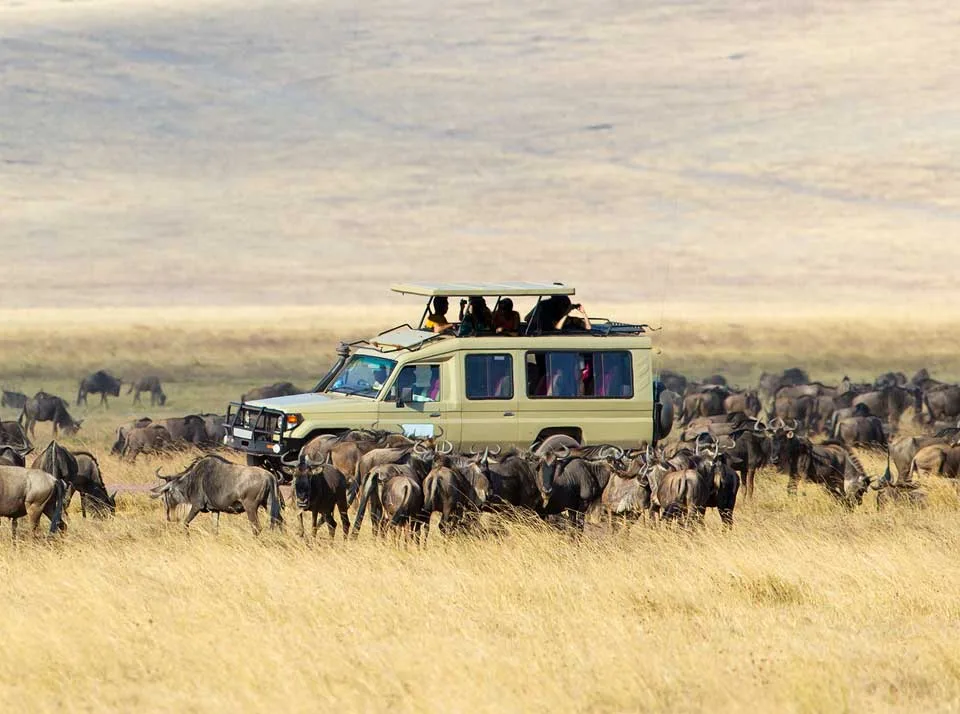
The vanguard of the migration—thousands of zebras followed by the first waves of wildebeest—typically crosses the Sand River from the Serengeti into the Mara. This is a fantastic time for photography because the grass is still lush and green, providing a vibrant backdrop to the black-and-white stripes of the zebras.
The Peak Drama (August – September)
This is “River Crossing Season.” The herds congregate on the banks of the Mara River, sometimes for days, testing the water’s edge. When one brave soul finally leaps, the floodgates open.
- Expert Insight: In 2026, we are seeing more crossings at the Talek River earlier in the season due to shifting localized rainfall patterns.
The Dispersal (October – Early November)
The herds spread out across the northern plains of the Mara. The tension of the river crossings is replaced by a sense of abundance. This is the best time for predator action, as lions and cheetahs take advantage of the sheer volume of prey before the herds begin their southern trek back to Tanzania.
2. Choosing Your Vantage Point: Reserve vs. Conservancy
One of the most common mistakes first-timers make is staying too far from the action. In the Mara, location is everything.
The National Reserve (The Epicenter)
If you want to see the famous river crossings, you need to be in the main reserve. This is where the Mara River flows.
- Pro: Immediate access to crossing points.
- Con: It can get crowded. In 2026, we strictly follow “Code of Conduct” guidelines to ensure we don’t crowd the animals.
The Private Conservancies (The Exclusive Retreat)
Areas like Mara North or Olare Motorogi offer a different kind of luxury.
- The Benefit: Only a limited number of vehicles are allowed at sightings. You can go off-road to follow a hunt and enjoy night game drives—things not permitted in the National Reserve.
- The Strategy: We often recommend a “Split Safari”—three nights in the reserve for the migration action and two nights in a conservancy for intimate, quiet wildlife encounters.
3. The 2026 “Secret” to a Better Migration Safari
Most tourists spend their entire day at the river waiting for a crossing. Our expert advice? Don’t forget the plains.
While the river is dramatic, the vast herds moving across the golden grasslands of the Mara Triangle are where you truly feel the scale of the migration. In 2026, we are emphasizing Guided Bush Walks on the periphery of the migration. Walking near the herds (with an armed ranger and expert guide) allows you to hear the constant “lowing” of the wildebeest and the smell of the dust—a sensory experience a vehicle simply can’t provide.
4. Packing & Tech for the 2026 Safari
Technology has changed how we capture the migration.
- Mirrorless is King: If you’re bringing a camera, mirrorless systems with “Animal Eye AF” are essential for those fast-paced river shots.
- The “Quiet” Drone: Note that drones are strictly prohibited in Kenyan National Parks without special (and expensive) permits. We suggest focusing on high-quality binoculars—the 8×42 remains the gold standard for safari.
- Sustainable Gear: Kenya has a strict ban on single-use plastics. Bring a high-quality reusable water bottle; your Kenya Safari Tours camp will provide filtered water.
Editorial Policy: Why Experience Matters
At Kenya Safaris Tours, our content is built on three pillars:
- Ecological Integrity: We only partner with lodges that have silver or gold Eco-Tourism Kenya ratings.
- Guide Seniority: We believe a guide is more than a driver; they are naturalists. Our lead guides have a minimum of 10 years of experience in the Mara ecosystem.
- Local Impact: 10% of our booking proceeds go toward predator compensation funds in the Maasai communities to reduce human-wildlife conflict.
Frequently Asked Questions
1. Can you guarantee a river crossing sighting?
No responsible operator should guarantee a crossing. It is a natural event dictated by the animals’ instinct and fear. However, by staying 4+ nights in the Mara River area, your chances increase to nearly 85%.
2. Is the Great Migration different in 2026?
Climate change has made rainfall more unpredictable. In 2026, we are seeing “mini-migrations” where smaller herds stay in the Mara year-round, but the massive “Mega-Herd” from the Serengeti still arrives between July and September.
3. How do I avoid the “minibus crowds” during the migration?
Book a fly-in safari to a camp located in a private conservancy. These camps use open-sided 4×4 vehicles and have strict limits on how many cars can be at a single sighting (usually no more than 3 to 5).
4. What is the “Great Migration” entry fee for 2026?
Kenya recently updated its park fee structure. For 2026, expect to pay approximately $100 – $200 per adult per day for the Maasai Mara, depending on whether you are staying inside or outside the reserve.
5. What happens to the migration in the “Green Season” (April-May)?
The herds are usually in the Southern Serengeti (Tanzania) for calving. While the “Great Migration” isn’t in Kenya then, the Mara remains incredible because its resident wildlife (the lions, leopards, and elephants that don’t migrate) are always there, and the lush scenery is spectacular for photography.
Ready to Witness the Spectacle?
The Great Migration is not just a holiday; it’s a bucket-list milestone that requires expert planning to get right. Let us handle the logistics while you focus on the horizon.
Contact Kenya Safari Tours:
- Website: KenyaSafariTours.com
- Email: info@kenyasafaristours.com
- WhatsApp/Call: +256414532162 / +256773912891
- Location:Kajjansi Bweya, Along Kajjansi Bweya Lutembe Rd, Near West Minister Theological College.